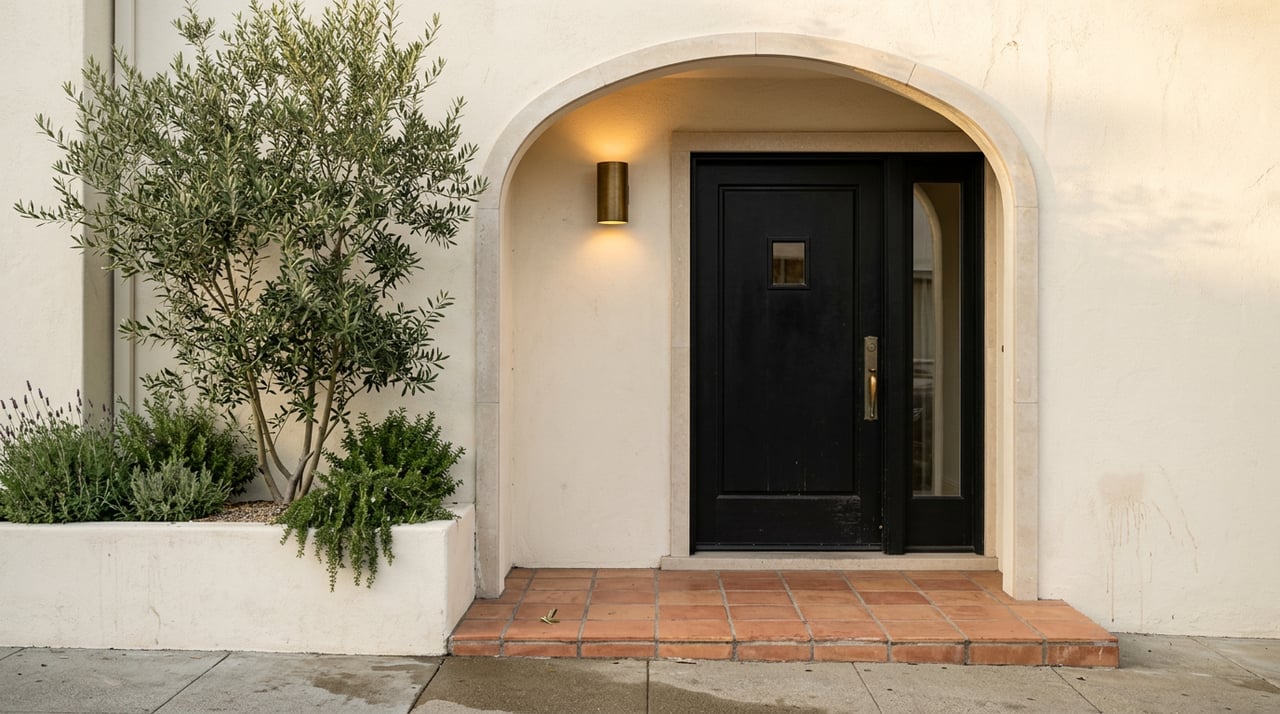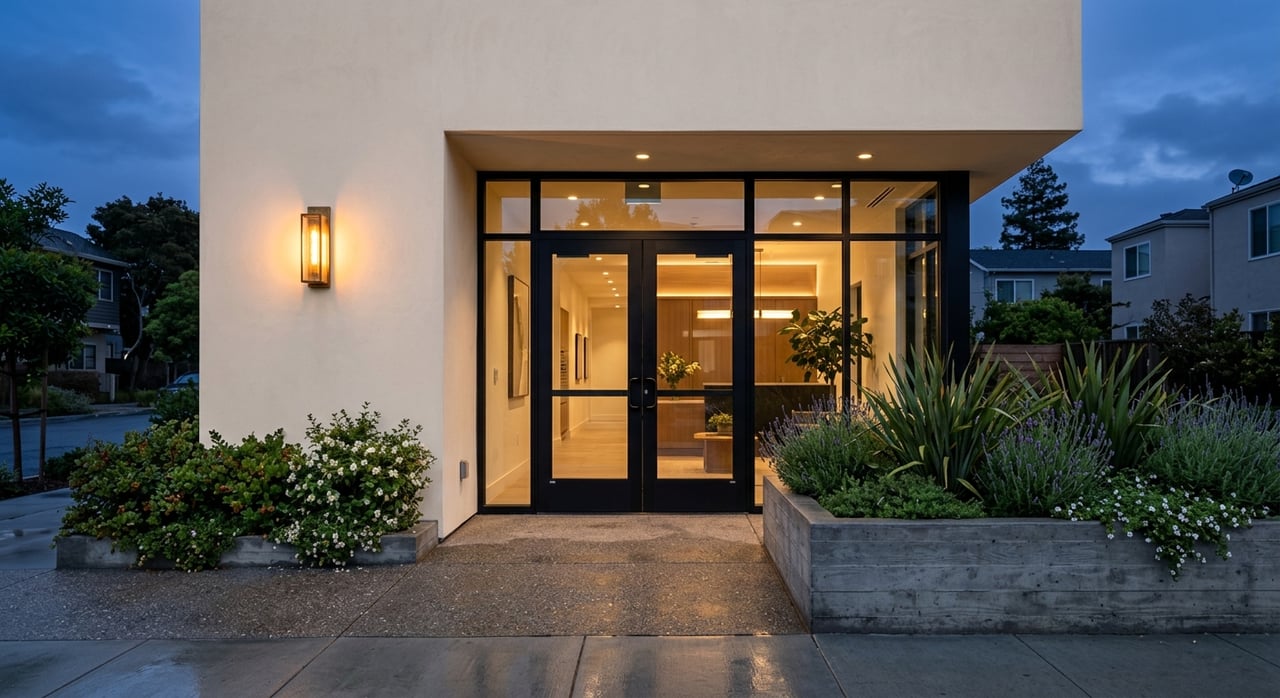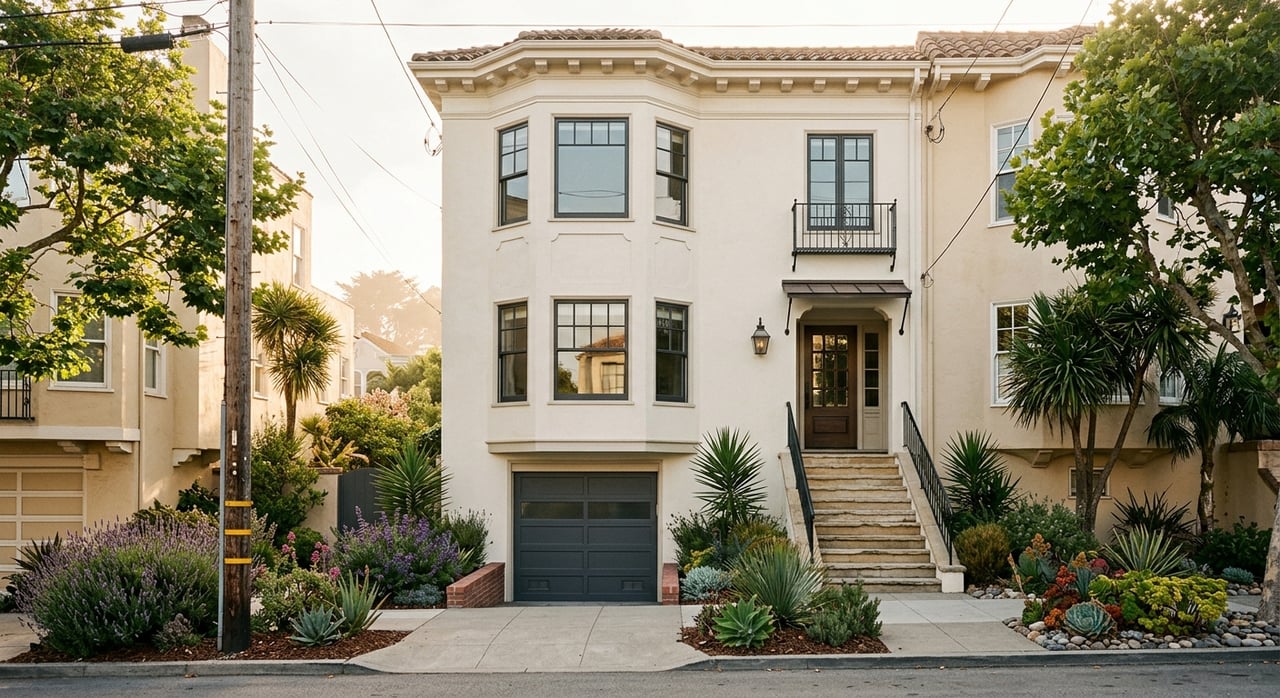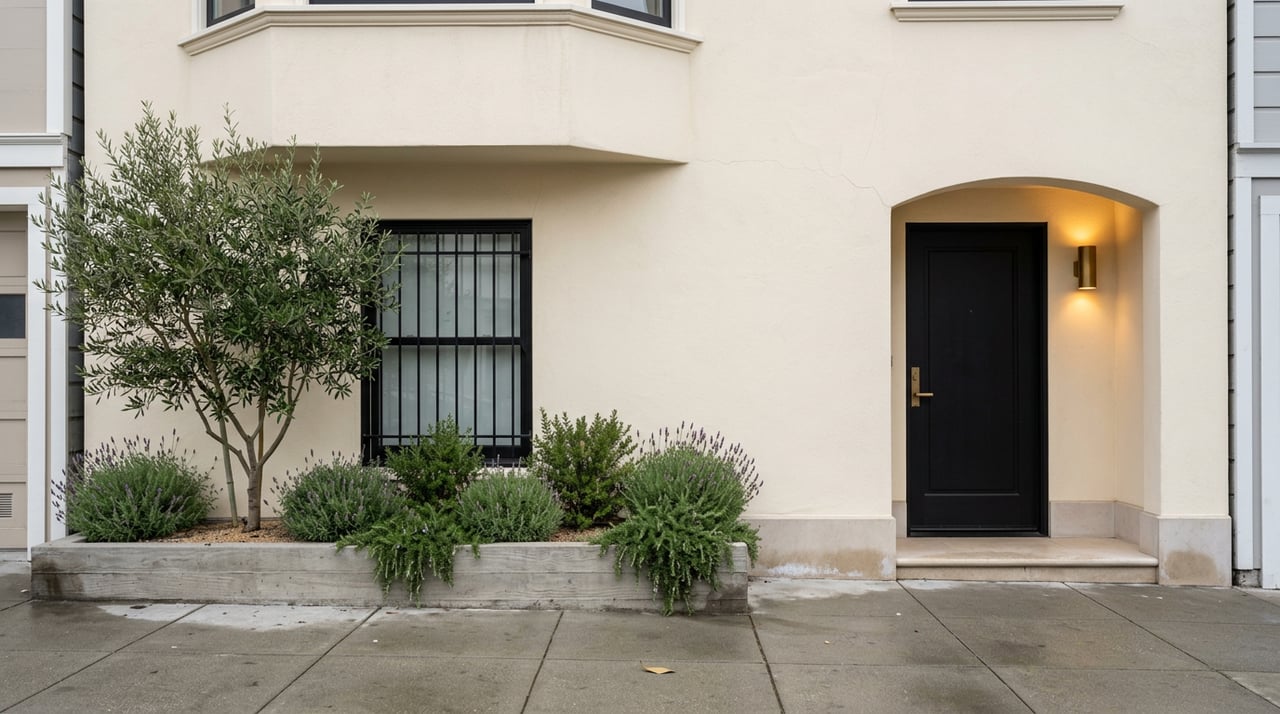
Two buildings sit two blocks apart in the Marina. Same era, same three-over-one massing, same painted stucco, listed within a few hundred dollars per square foot of each other. On paper the comp is clean. Open the disclosure package on each, and the resemblance ends.
The one on the north side has a Certificate of Final Completion for its soft-story retrofit, a mat foundation noted in the geotechnical report, and a Natural Hazard Disclosure that reads the way any Marina NHD will read. The one on the south side has an open permit, no completion sign-off, and a building manager who is quietly hoping the buyer will not ask. Same street, same block face, very different transactions. In the Marina, the seismic story of a specific building is doing more pricing work than the block-level comps ever will, and most buyers under-price the gap.
The one question that reprices a Marina building
Before comps, before the HOA docs, before the walkthrough. If the building was constructed before 1978 and has five or more units over a garage or ground-floor commercial space, the first question is whether the soft-story retrofit is finished, permitted, and signed off.
San Francisco's Mandatory Soft Story Retrofit Program requires owners of older wood-frame, multi-unit buildings with a weak ground floor to strengthen them against earthquakes, and the four-tier deadline schedule has now fully passed, so any covered building that has not been retrofitted is out of compliance. That is not a future problem the seller can push down the road. It is a live building code violation at the moment of listing.
Soft-story buildings are concentrated in the Marina, Chinatown, Western Addition, Castro/Noe Valley, Richmond, and Mission neighborhoods, and District 2, which includes the Marina, has been reported among the districts with the highest counts of non-compliant buildings. The point is not that the Marina is uniquely risky. The point is that the odds of touching a soft-story building in a Marina transaction are meaningfully higher than in most of the city, and buyers who treat this as a footnote are handing money away.
What the disclosure package actually tells you
A Marina disclosure package is not a stack of legalese to skim. It is the pricing document. Three items carry most of the weight:
- The Natural Hazard Disclosure (NHD) report. California requires a Natural Hazard Disclosure report for every residential real estate transaction. In the Marina, expect the liquefaction zone box to be checked. The question is not whether the property is in the zone. It is what the building has done about it.
- Soft-story compliance status. Search the property against the city's Soft-Story properties map and the SFDBI permit record. You want a Certificate of Final Completion, not an open permit and not a promise.
- Foundation type and geotechnical notes. Original perimeter foundation, retrofitted with shear walls and hold-downs, mat slab, or drilled piers. Each tells a different story about how the building is expected to behave on Marina fill.
If those three items are clean, the rest of the diligence gets easier. If they are ambiguous, everything downstream is guesswork.
The three foundation stories a Marina building can tell
The Marina is not uniformly built on landfill. Some blocks sit on bay fill placed for the 1915 Panama-Pacific International Exposition. Others sit on older, firmer material. The buildings on those blocks tell one of three stories:
| Building type | What to look for in the file | What it usually means at the offer |
|---|---|---|
| Pre-1978 wood-frame, tuck-under garage | Completed soft-story retrofit under Ordinance 66-13, shear walls and steel moment frames at the ground floor | Priced like a normal Marina building. The seismic story is closed. |
| Pre-1978, non-compliant or open permit | No Certificate of Final Completion, possible Earthquake Warning placard by the entry | Buyer takes on the retrofit and the risk of a public placard. Room to renegotiate. |
| Newer construction on fill | Geotechnical report, mat foundation or deep piers, engineered for the local soil | Priced like new construction anywhere. Foundation engineering is doing the work. |
San Francisco embarked on the mandatory seismic retrofit of its wood-framed soft-story apartment buildings in 2013, after the 1989 Loma Prieta earthquake caused considerable damage to such buildings in the Marina District and exposed the vulnerability of buildings with soft and weak first stories. The ordinance targeted a specific structural pattern. It did not touch newer construction, and it did not touch single-family homes with living space over a garage, which is a related but separate diligence question.
Why the deadline being "over" matters at closing
When compliance deadlines are active, non-compliance is a schedule problem. When deadlines have passed, non-compliance is an enforcement problem, and enforcement shows up in the disclosure package.
Non-compliance is a Building Code violation that can bring DBI fines and enforcement notices, and the city may post a public Earthquake Warning placard on the building. A placard on the entry is not a subtle marketing problem for a seller. It is a sign at the front door that the building has been publicly flagged. Buyers who see one on the tour tend to reprice, or walk.
The retrofit itself is not cheap. Landlords can pass through 100 percent of the retrofit cost to tenants amortized over a 20-year period, with the work running between $50,000 and $200,000 and the pass-through split evenly among the units. More recent estimates from structural engineers active in the SF market put straightforward projects at $20,000 to $25,000 per unit, with complicated buildings costing more. On a small Marina building with an HOA of six or eight owners, that is a real special assessment that a smart buyer will want to see either finished or fully reserved for before removing contingencies.
The 2026 grant window sellers keep missing
If you own a Marina building that still needs the work, there is a specific window worth knowing about this year. The California Residential Mitigation Program will open the registration window for its Earthquake Multi-Unit Retrofit grant program on August 19, with applications accepted through September 30, 2026, and property owners are encouraged to register in advance. Eligible building owners can receive grants of up to $49,600 to offset the cost of a soft-story retrofit, including up to $7,000 toward permits and engineered plans and up to $4,260 per unit toward construction, with grants covering up to 70 percent of eligible expenses.
For a seller planning to list a soft-story Marina building in the next twelve to eighteen months, that math changes the prep conversation. A retrofit that shows up in the disclosure package as complete, funded partly by grant dollars, is not just a code fix. It is a comp defense.
How this shows up in the offer
Buyers who have done this diligence tend to write offers that reflect it. Sellers who have done the prep tend to see offers that reflect that too. A few practical moves that separate a clean Marina transaction from a messy one:
- Pull the SFDBI permit history for the building before you write the offer, not after inspections.
- Confirm the foundation type in writing. Original perimeter, retrofitted, mat, or piered. Ask the HOA for the geotechnical report if there is one.
- Read the HOA reserve study for a "seismic" or "structural" line item. A building that has not budgeted for the work has already told you something.
- Price earthquake insurance before you remove your loan contingency. Standard homeowners insurance does not cover earthquake damage, and CEA earthquake policies cover the dwelling but carry high deductibles of 10 to 25 percent and do not cover landscaping or detached structures. Independent 2026 analysis of Marina condos in this price band suggests earthquake coverage can add roughly $3,000 to $6,000 per year on a $1.4 million unit, which is a real number to fold into the offer, not an afterthought.
- If the building is non-compliant, ask the seller to complete the retrofit before close or credit the full engineer's estimate, not a round number.
None of this makes a Marina building a bad buy. Plenty of the most desirable homes in the city sit inside the same liquefaction footprint, and buyers keep buying them for good reasons. The point is that the disclosure package is where the real price of a Marina building is set, and the buyers and sellers who read it as a pricing document do better than the ones who read it as paperwork.
FAQ
Does being in a liquefaction zone stop me from getting a mortgage? No. Being in a liquefaction zone does not prevent you from getting a conventional, FHA, VA, or jumbo mortgage. Lenders look at the loan and the appraisal, not the NHD checkbox.
Is the whole Marina on landfill? No. The neighborhood sits on a mix of bay fill and older, firmer ground, and the California Geological Survey and USGS liquefaction hazard maps show the pattern block by block. Two addresses within a short walk of each other can sit on very different soils.
Does a completed retrofit make earthquake insurance cheaper? Not automatically, but it changes the risk story you can tell an underwriter, and it removes the code-violation overhang that scares off buyers. That is where the value shows up first.
What if the single-family home I want has living space over a garage? That structural pattern is a common concern in Marina row houses, and the mandatory retrofit ordinance did not reach single-family homes. A licensed structural engineer's evaluation is the right tool, not the city's compliance list.
Buying or selling a Marina home is a diligence exercise before it is a pricing exercise. If you want a second read on a specific building's disclosure package, foundation history, or retrofit status before you write or accept an offer, Team Dibachi is happy to walk through it with you. Let's Connect.