If you have ever walked through the Marina and felt like the neighborhood looks unusually polished, cohesive, and easy on the eyes, you are not imagining it. The Marina has a distinct visual rhythm that comes from how quickly much of it was built and how consistently its early architecture took shape. In this guide, you will learn how to spot the neighborhood’s most common home styles, what details matter most, and what buyers and sellers should keep in mind as they look more closely. Let’s dive in.
Why the Marina Looks So Unified
The Marina did not evolve the same way as some of San Francisco’s older neighborhoods. Historically known as Harbor View, the area included marshy edges, sand dunes, truck farms, fishermen’s shacks, and industrial uses before major change followed the 1915 Panama Pacific International Exposition.
In the 1920s and early 1930s, subdivision work reshaped the neighborhood on filled land. That planning introduced diagonal boulevards, curving streets, and a more intentional layout, which helps explain why the Marina feels more coordinated than a strict city grid.
A relatively small group of builders and architects helped shape much of the district during that period. Many lots were also re-subdivided into standard widths that worked well for flats, rowhouses, and small apartment buildings, creating a neighborhood that feels visually consistent while still offering variety.
Marina Street Patterns to Notice
Before you look at a single facade, start with the streets themselves. The Marina’s diagonal boulevards, triangular blocks, and curving avenues create a softer, more planned feel than many other parts of San Francisco.
That street pattern changes the way buildings relate to each other. You often see low-rise structures sitting close together, with similar setback lines and garage-fronted facades that create a steady streetwall from block to block.
Corner buildings are another visual clue. They are often larger and feel more urban in character, while interior residential blocks tend to read as lower, quieter, and more uniform.
Spanish Revival Sets the Tone
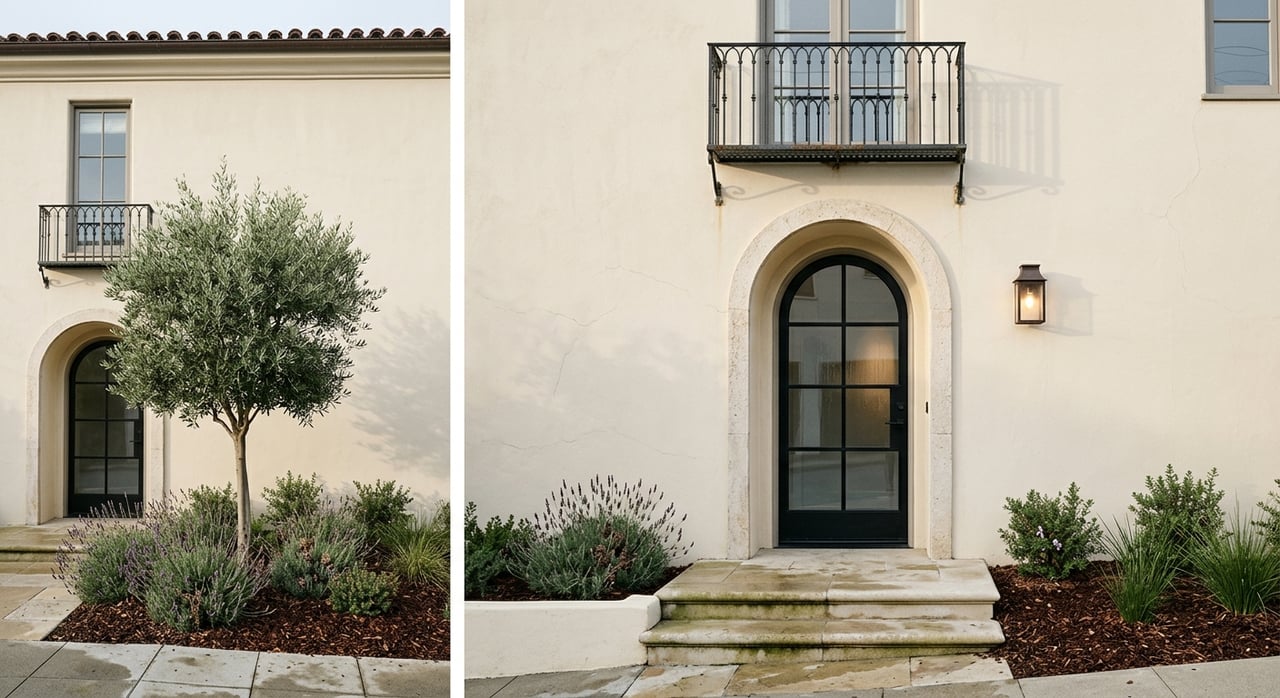
If you want the quickest shorthand for classic Marina architecture, start with Mediterranean and Spanish Revival design. This is the neighborhood’s dominant visual language from its first major wave of residential development.
You will often see features like:
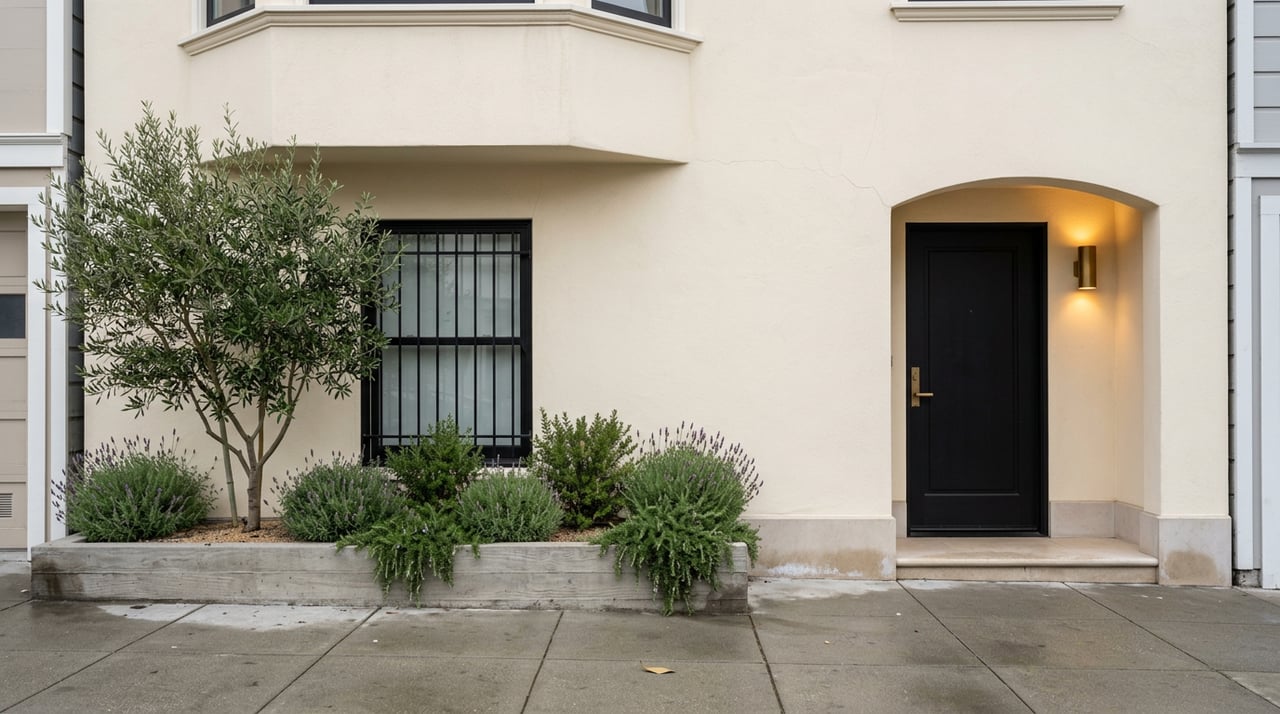
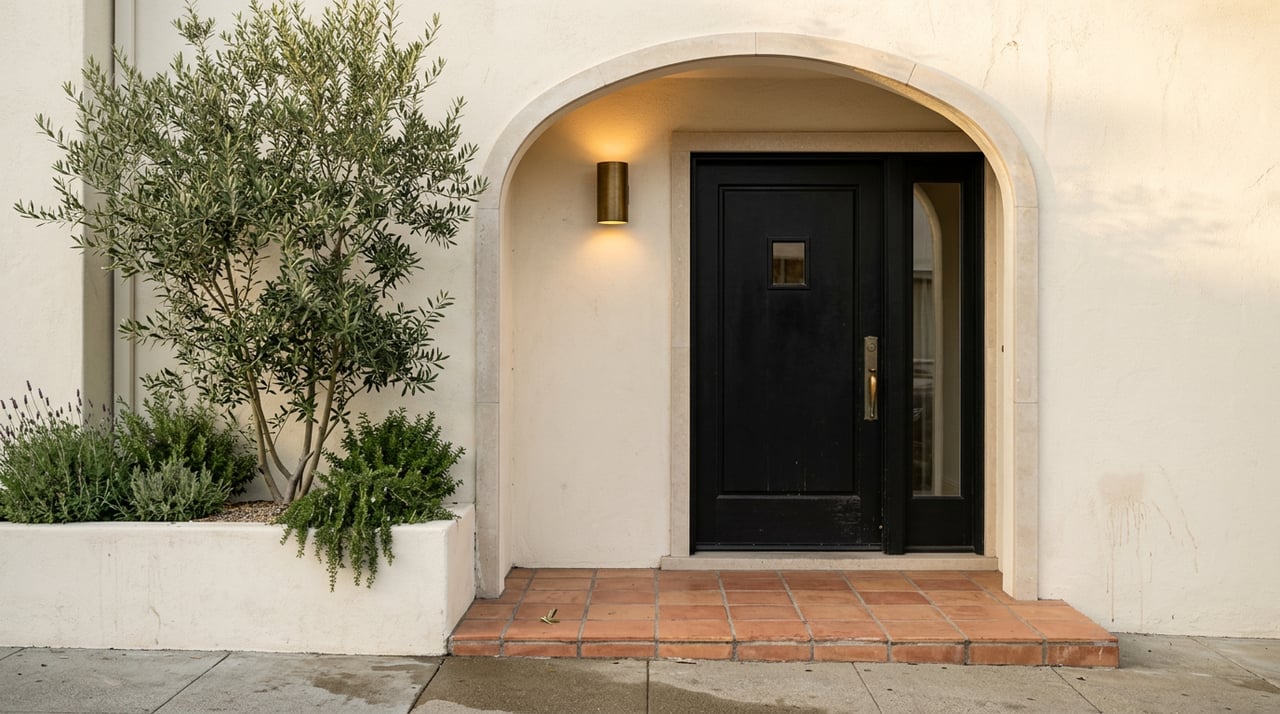
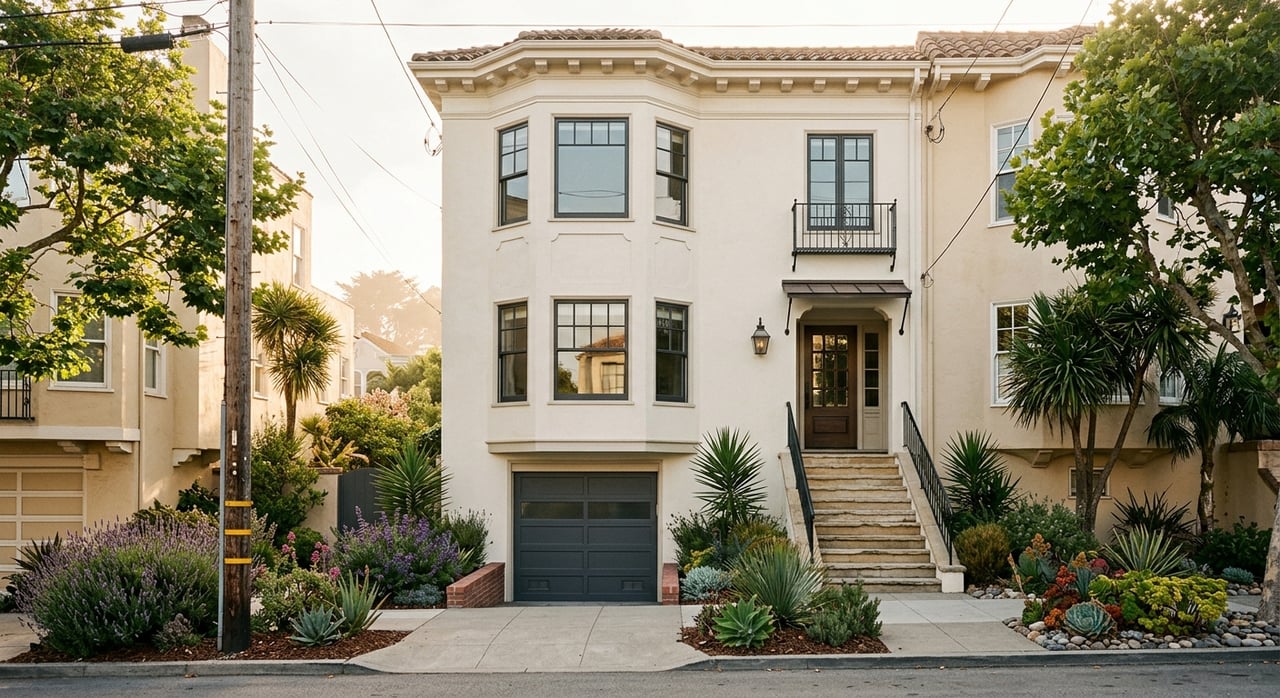
- Smooth or textured stucco exteriors
- Red clay tile roofs
- Wrought iron balconies or grilles
- Arched entries
- Multi-lite windows, either arched or rectangular
- Decorative tile accents and entry surrounds
These details give many Marina homes their warm, coastal look. They also pair naturally with the neighborhood’s street names and overall planning, which SF Planning materials connect to a romantic Spanish theme.
Flats and Rowhouses Define Daily Living
One of the most important things to understand about the Marina is that much of its housing stock is multi-unit. While many people picture elegant standalone homes, the neighborhood is filled with flats, rowhouses, and small apartment buildings that shape its real everyday character.
A common building type is two to three stories over a garage. This format appears across many residential blocks and helps explain the Marina’s compact, city-oriented feel.
This matters if you are buying or selling here. In the Marina, evaluating a property often means looking beyond curb appeal and understanding how a building’s layout, shared systems, garage level, and multi-unit structure affect ownership and upkeep.
Corner Buildings Add Deco Drama
The Marina is visually coherent, but it is not one-note. Alongside Spanish Revival homes, you will also find Period Revival, Art Deco, and Streamline Moderne influences woven into the neighborhood.
Art Deco is especially common on larger corner apartment buildings and commercial buildings along Chestnut Street. These properties often bring sharper geometry, bolder ornament, and a more urban presence than the softer residential facades found mid-block.
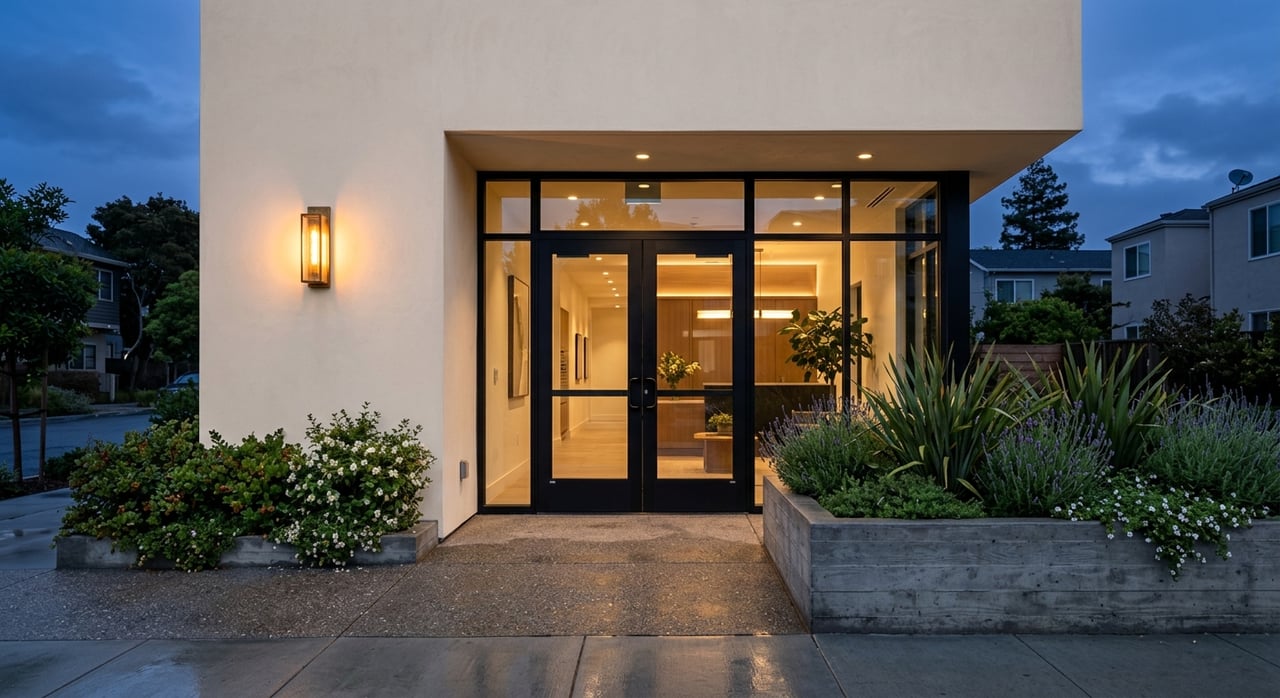
Streamline Moderne buildings add another layer. Their smoother lines and more horizontal feel create contrast with the arches, tile roofs, and ornamental ironwork seen on nearby Mediterranean-inspired homes.
Chestnut Street Shows Mixed-Use Marina
If you want to understand how architecture supports lifestyle in the Marina, look at Chestnut Street. It includes mixed-use buildings with shops at street level and flats or apartments above, which helps the neighborhood feel both residential and village-like.
That combination is a big part of the Marina’s identity. You can see how the built form supports everyday walkability while still preserving the low-rise scale that makes the area feel approachable.
For buyers, this can mean living close to retail, dining, and neighborhood activity. For sellers, it helps explain why location within the Marina, even by just a few blocks, can shape how a home is experienced and perceived.
Modern Layers Round Out the Neighborhood
The Marina’s story did not stop in the 1930s. Later Modern additions, including midcentury examples like the 1959 Marina Safeway, show that newer architecture entered the district without fully erasing its earlier character.
That layered quality is worth noticing. A strong visual guide to the Marina should not present the neighborhood as frozen in time, because part of its appeal is the way earlier styles and later infill coexist.
For you as a buyer or seller, that means comparisons should be thoughtful. A classic stucco facade with iron detailing and tile accents may appeal very differently than a cleaner-lined midcentury or more modern interpretation, even when both sit within the same neighborhood context.
What to Look for on a Walk
If you are touring homes, previewing the neighborhood, or simply trying to train your eye, focus on a few repeat details first. The Marina becomes easier to read once you know what patterns show up again and again.
Look for these visual markers:
- Stucco exterior walls
- Clay tile roofs
- Wrought iron railings and grilles
- Arched doors and entryways
- Decorative surrounds at entrances
- Garage-forward lower levels
- Larger corner apartment buildings with Deco or Moderne ornament
- Mixed-use buildings on Chestnut Street
It also helps to step back and notice massing. Many Marina buildings are low-rise, close together, and aligned in a way that makes each block feel composed rather than random.
What Architecture Means for Buyers
In a neighborhood like the Marina, style is not just about looks. Architecture influences maintenance, renovation planning, and how you evaluate long-term ownership.
Many classic Marina buildings use stucco, clay tile, and iron details. In practical terms, exterior upkeep often centers on weatherproofing, roof condition, and preserving original trim and detailing rather than making dramatic facade changes.
If you are considering a multi-unit wood-frame building, soft-story retrofit status is an important item to verify. San Francisco’s mandatory soft-story program applies to certain pre-1978 wood-frame buildings with five or more residential units and two or more stories over a soft story, so this is a meaningful due diligence point in parts of the Marina.
Historic status also matters. If a property is a historic resource or contributor to an eligible historic district, exterior alterations may be reviewed under CEQA, and some qualified historic properties may be eligible for Mills Act tax benefits in exchange for preservation commitments.
What Architecture Means for Sellers
If you own a Marina home, architectural character is often one of your strongest assets. Buyers are frequently drawn to original details, cohesive facades, and the neighborhood’s recognizable 1920s and 1930s visual identity.
That said, preparation matters. Before planning exterior work, additions, or design changes, it is wise to understand whether the property has a historic designation or may be considered a contributor to an eligible historic district.
It is also smart to review remodel history carefully. Window changes, facade updates, and prior exterior work can all become more important when buyers are paying close attention to authenticity, maintenance, and future improvement potential.
The Marina’s Look in One Sentence
If you had to sum up the Marina quickly, the clearest description is this: it is a compact 1920s-to-1930s seaside neighborhood with a Mediterranean and Spanish Revival base, Art Deco and Streamline Moderne accents, and later Modern infill.
That blend is what makes the area so memorable. The Marina feels polished and design-forward at first glance, but the more closely you look, the more architectural variety you will find.
If you are thinking about buying or selling in the Marina, understanding the neighborhood’s housing stock can help you make better decisions about value, upkeep, and fit. When you want grounded San Francisco guidance with local context, connect with Faye Dibachi for thoughtful support.
FAQs
What architectural style is most common in the Marina neighborhood?
- The Marina is best known for Mediterranean and Spanish Revival architecture, with common features like stucco walls, red clay tile roofs, wrought iron details, and arched entries.
What types of homes are common in the Marina?
- Many Marina properties are flats, rowhouses, and small apartment buildings, often two to three stories over a garage, rather than primarily detached single-family homes.
What should buyers look for in Marina buildings?
- Buyers should look at architectural details, exterior materials, roof condition, maintenance needs, multi-unit building layout, and soft-story retrofit status where applicable.
What makes Marina streets look different from other San Francisco areas?
- The Marina has diagonal boulevards, triangular blocks, and curving avenues created during early 20th-century planning, which gives it a softer and more unified feel than a rigid street grid.
What should sellers know before remodeling a Marina property?
- Sellers should check whether the property is a historic resource or contributes to an eligible historic district, because exterior alterations may require added review and past changes may matter to buyers.
Why does Chestnut Street matter to Marina architecture?
- Chestnut Street shows the neighborhood’s mixed-use character, with stores at street level and flats or apartments above, helping explain the Marina’s blend of residential scale and everyday convenience.